

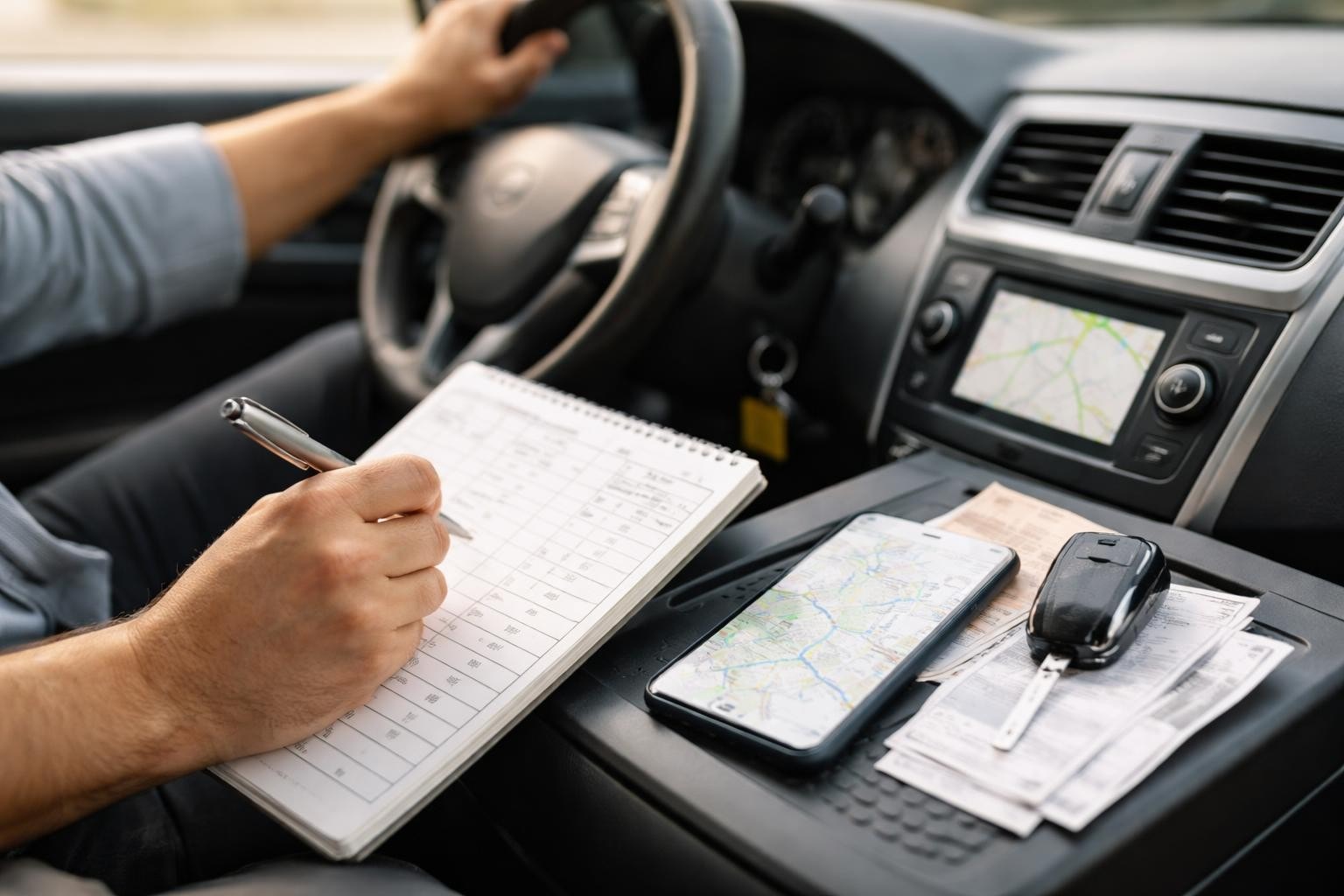
Claiming mileage expenses through HMRC represents one of the most valuable tax reliefs available to UK drivers who use their personal vehicles for business purposes. Whether you’re self-employed, a company director, or an employee who travels for work, understanding how to properly submit hmrc mileage claims can result in significant tax savings or reimbursements. With specific rates set by HMRC and strict documentation requirements, knowing the correct procedures ensures you maximize your deductions while remaining fully compliant with UK tax regulations.
Understanding HMRC Approved Mileage Rates
HMRC establishes Approved Mileage Allowance Payments (AMAPs) that determine how much you can claim per mile driven for business purposes. These rates are designed to cover both fuel costs and vehicle wear and tear, providing a simplified method for calculating business travel expenses.
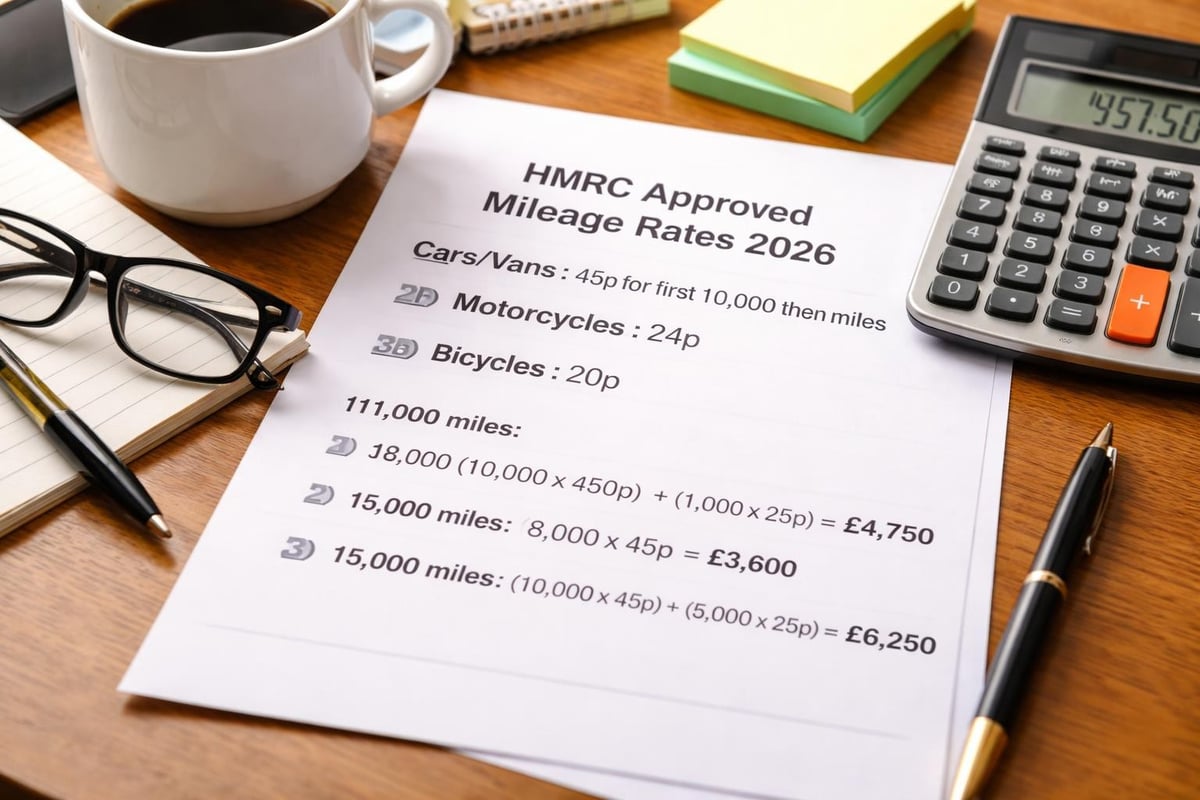
For cars and vans, the current rates stand at 45 pence per mile for the first 10,000 business miles in a tax year, dropping to 25 pence per mile for every mile beyond that threshold. Motorcyclists can claim 24 pence per mile, while bicycle users are entitled to 20 pence per mile.
How Mileage Rates Are Determined
The government commissioned research on simplified mileage rates to ensure these figures accurately reflect the true costs of operating vehicles for business purposes. This research considers fuel expenses, insurance, maintenance, depreciation, and other ownership costs.
It’s important to note that these approved rates differ from Advisory Fuel Rates, which apply specifically to company car users. The official HMRC rates and allowances documentation provides comprehensive breakdowns of all applicable rates for different vehicle types and circumstances.
What Qualifies as Business Mileage
Not every journey in your vehicle qualifies for hmrc mileage claims. Understanding the distinction between business and personal travel is crucial for maintaining compliance and avoiding rejected claims during HMRC reviews.
Business mileage includes:
- Travel from your usual workplace to client meetings or temporary work locations
- Journeys between multiple work sites during the same day
- Travel to conferences, training events, or business-related seminars
- Trips to purchase necessary business supplies or equipment
- Delivery or collection of goods related to your business operations
Non-qualifying journeys:
- Regular commuting between home and your permanent workplace
- Personal errands or leisure travel
- Travel that combines business and personal purposes (only the business portion qualifies)
According to guidance on what HMRC classifies as business mileage, the key distinction rests on whether the journey is “wholly, exclusively, and necessarily” for business purposes. Self-employed individuals have slightly different rules than employees, particularly regarding travel from home to business locations.
Special Circumstances and Exceptions
If you work from home as your primary place of business, travel to client sites typically qualifies as business mileage. Temporary workplace assignments lasting less than 24 months also count as business travel. However, once a temporary location becomes permanent, commuting rules apply.
Record Keeping Requirements for Mileage Claims
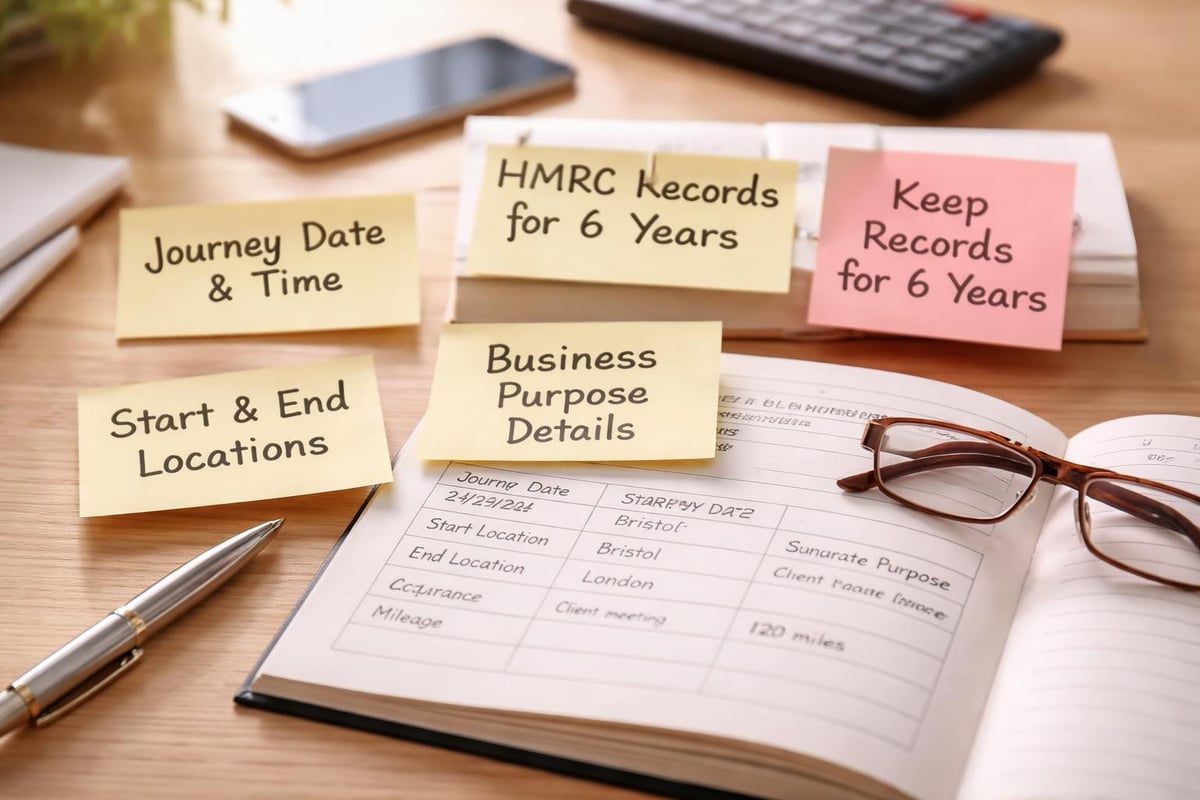
HMRC expects detailed, contemporaneous records for all mileage claims. Insufficient documentation represents one of the primary reasons claims get rejected or reduced during tax investigations. The specific records HMRC expects when reviewing claims include comprehensive journey logs with essential details.
Essential Documentation Elements
| Record Type | Required Information | Retention Period |
|---|---|---|
| Journey Date | Exact date of each trip | 6 years minimum |
| Start/End Locations | Specific addresses or postcodes | 6 years minimum |
| Business Purpose | Reason for journey, client/supplier name | 6 years minimum |
| Miles Traveled | Accurate distance for each trip | 6 years minimum |
| Total Annual Mileage | Complete vehicle usage including personal | 6 years minimum |
Modern GPS-based tracking solutions like those offered by specialized mileage apps provide automatic, timestamped journey records that meet HMRC requirements. These digital logs prove particularly valuable during audits, as they eliminate questions about accuracy and contemporaneous recording.
Your mileage log should distinguish clearly between business and personal journeys. HMRC may request evidence supporting your business purpose claims, such as meeting confirmations, invoices, or correspondence with clients. Maintaining calendar entries or appointment records alongside mileage logs strengthens your documentation.
Claiming Mileage as a Self-Employed Individual
Self-employed workers, freelancers, and sole traders claim business mileage through their annual Self Assessment tax return. This process differs significantly from employee claims and offers direct tax relief on business vehicle expenses.
Calculating Your Mileage Deduction
- Track all business journeys throughout the tax year (April 6 to April 5)
- Calculate total business miles from your comprehensive mileage log
- Apply HMRC rates: multiply first 10,000 miles by 45p, remaining miles by 25p
- Record the total as a business expense in your Self Assessment return
The tax relief you receive depends on your tax bracket. If you’re a basic rate taxpayer claiming £4,500 in mileage expenses, you’ll save £900 in tax (20% of £4,500). Higher rate taxpayers save 40%, while additional rate taxpayers save 45%.
For accurate tracking that simplifies this process, the best mileage tracking apps for self-employed professionals calculate your deductions based on current HMRC rates and generate tax-ready reports.
Self Assessment Reporting
Include your mileage expenses in the “motor expenses” section of your Self Assessment tax return. You don’t need to submit your mileage log with your return, but HMRC may request it during compliance checks. Keep all records for at least six years after the submission deadline for the relevant tax year.
Employee Mileage Claims and Reimbursements
Employees who use personal vehicles for business travel have two options for hmrc mileage claims: reimbursement from employers or direct tax relief through HMRC.
Employer Reimbursement Process
When employers reimburse employees at or below the approved HMRC rates, these payments are tax-free and don’t need reporting. If your employer pays less than the approved rates, you can claim tax relief on the difference. If they pay more, the excess becomes taxable income.
Example scenarios:
- You drive 8,000 business miles; employer pays 30p per mile
- You’re entitled to: 8,000 × 45p = £3,600
- You received: 8,000 × 30p = £2,400
- You can claim tax relief on: £1,200 difference
Recent changes to HMRC’s PAYE employment expense claims process mean employees must provide more detailed evidence when claiming unreimbursed expenses. This increases the importance of maintaining thorough mileage records.
Making Direct Claims to HMRC
Employees can claim mileage tax relief through their Personal Tax Account or by submitting form P87. The relief reduces your taxable income, providing savings based on your tax rate. Unlike self-employed claims that reduce overall business profit, employee claims specifically target the tax relief mechanism.
| Claim Method | Processing Time | Best For |
|---|---|---|
| Online Personal Tax Account | 4-6 weeks | Single year claims |
| Form P87 (paper) | 8-12 weeks | Simple claims |
| Self Assessment | Next tax year | Multiple expenses |
| PAYE adjustment | Variable | Ongoing annual expenses |
Company Car Users and Advisory Fuel Rates
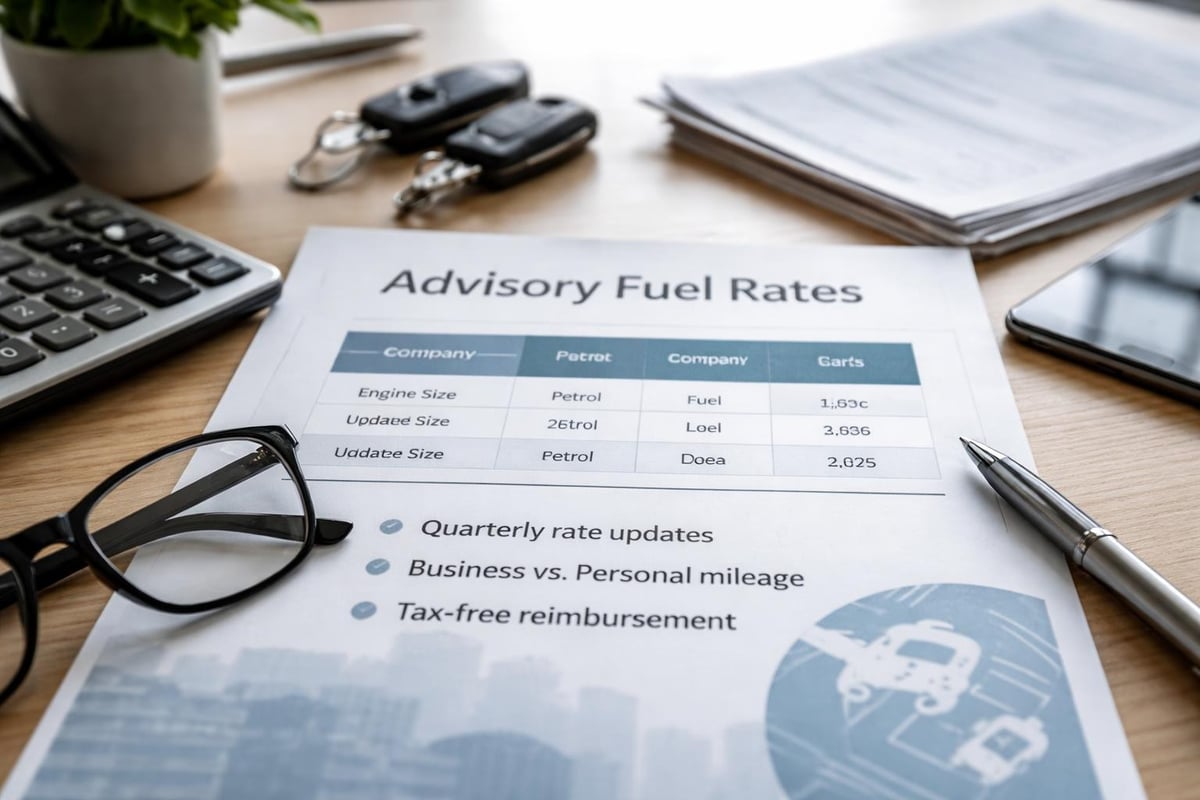
Business mileage claims work differently for company car users. Instead of approved mileage rates, employers reimburse based on Advisory Fuel Rates (AFRs), which cover only fuel costs, not vehicle depreciation or maintenance.
Advisory Fuel Rates change quarterly based on fuel price fluctuations. The latest HMRC Advisory Fuel Rates effective from March 2026 reflect current market conditions and vary by engine size and fuel type.
Current Advisory Fuel Rates
Electric vehicle rates also receive regular updates, with new advisory electric rates reflecting the growing adoption of EVs in company fleets. These rates apply when employees use company electric vehicles for business travel and personally pay for electricity.
Company car drivers cannot use the standard 45p/25p mileage rates. They’re limited to AFRs for business journeys in their company vehicle. However, if they use a personal vehicle for business purposes, standard mileage rates apply to those journeys.
Common Mistakes and How to Avoid Them
Many drivers inadvertently reduce their hmrc mileage claims or face compliance issues through common errors. Understanding these pitfalls helps ensure you claim correctly and maintain proper documentation.
Frequent Errors
Claiming commuting as business mileage remains the most common mistake. HMRC strictly enforces the rule that regular home-to-work travel doesn’t qualify, regardless of distance or necessity. Only travel between home and temporary workplaces or from home as a base of business operations counts.
Insufficient record keeping creates problems during HMRC reviews. Recreating mileage logs from memory or rough estimates rarely satisfies HMRC requirements. Contemporary records made at the time of travel carry significantly more weight.
Mixing business and personal journeys without clear separation leads to claim rejections. If you make a business trip but add personal errands, only the direct business route qualifies. Detailed logs showing specific purposes prevent this confusion.
Forgetting to claim smaller journeys reduces your total deduction. Short trips to the post office, bank, or supplier visits add up over the tax year. Comprehensive tracking ensures you capture every qualifying mile.
Using incorrect rates for subsequent miles after the 10,000 threshold costs money. Many taxpayers continue claiming 45p per mile throughout the year, missing the rate change.
Maximizing Your Mileage Claims
Strategic approaches to tracking and claiming business mileage can significantly increase your tax savings while maintaining full compliance with HMRC regulations.
Optimization Strategies
- Track immediately: Record journeys as they happen rather than reconstructing them later
- Use technology: GPS-based automatic tracking eliminates forgotten trips and provides precise distances
- Separate vehicles: If possible, dedicate one vehicle primarily to business use for clearer record-keeping
- Plan routes efficiently: Combining multiple business purposes in one journey maximizes qualifying miles
- Review monthly: Regular reviews ensure no qualifying journeys get overlooked
For those making frequent business journeys, automated tracking systems remove the administrative burden while ensuring accuracy. Digital solutions timestamp each trip, calculate distances precisely, and categorize journeys in real-time.
Multi-Vehicle Considerations
If you use multiple vehicles for business purposes, track each separately and claim for all qualifying journeys. You might use a car for most business travel but occasionally use a motorcycle or bicycle for specific purposes. Each vehicle type has its own HMRC rate, and all can contribute to your total claim.
Annual Review and Claim Submission
Approaching hmrc mileage claims systematically at year-end ensures you capture all eligible deductions and submit accurate information to HMRC.
Pre-submission checklist:
- Verify total business miles across all vehicles
- Confirm start of tax year mileage readings
- Review journey purposes for business justification
- Calculate claims using correct rate thresholds
- Cross-reference with appointment calendars and client records
- Ensure six-year record retention compliance
Self-employed individuals report mileage expenses in the employment section of their Self Assessment return, while employees claim through their Personal Tax Account or form P87. Both methods require the same underlying documentation standards.
Handling HMRC Queries
If HMRC queries your mileage claim, respond promptly with comprehensive documentation. Present your mileage log alongside supporting evidence like client correspondence, delivery notes, or appointment confirmations. GPS-tracked journeys with automatic timestamps provide particularly strong evidence.
Most queries arise from statistical analyses that flag unusually high claims or inconsistent patterns. Clear, detailed records with obvious business purposes typically resolve questions quickly.
Integration with Modern Tracking Solutions
Traditional paper logbooks or spreadsheet tracking consume valuable time and increase error risks. Modern GPS-based applications automate the entire process while ensuring HMRC compliance.
Quality mileage tracking apps automatically detect journeys, calculate distances using GPS coordinates, and generate tax-ready reports formatted for HMRC submissions. These solutions eliminate the common problem of forgotten trips while providing verifiable, timestamped evidence that satisfies HMRC scrutiny.
Features that benefit mileage claim accuracy include automatic journey detection, cloud backup of records, customizable business rules, export functions for accountants, and multi-vehicle support. These capabilities transform mileage tracking from an administrative burden into a streamlined process that maximizes legitimate tax deductions.
Understanding hmrc mileage claims thoroughly ensures you capture every legitimate tax deduction while maintaining documentation that withstands HMRC review. The combination of approved mileage rates, proper record keeping, and accurate claim submission creates significant tax savings for anyone driving for business purposes. Milelify simplifies this entire process with GPS-based tracking, HMRC-compliant reporting, and accurate mileage calculations that help you maximize deductions without premium subscription costs.